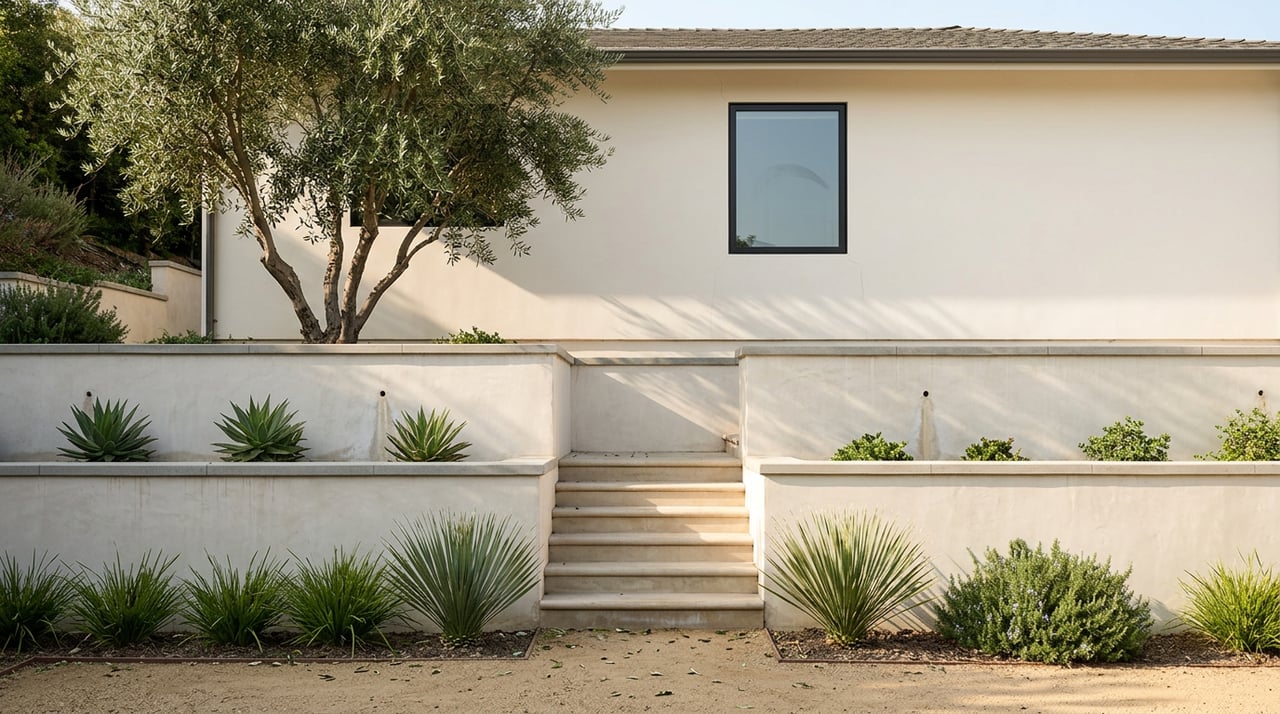
A buyer under contract on a view home in Laurel Canyon calls their inspector on day fourteen of a seventeen-day general inspection period. The roof checks out. The foundation looks solid. Then the inspector mentions, almost as an aside, that the retaining wall holding up the back terrace has no permit history on file. That one sentence can add weeks to escrow, a geotechnical engineer to the budget, and a very different negotiation than the one the buyer expected when the offer was written.
This is the version of due diligence that generic inspection checklists don't prepare hillside buyers for. And it's happening more often across Laurel Canyon, Beachwood Canyon, the Bird Streets, Outpost Estates, Hollywoodland, Whitley Heights, Mount Olympus and Nichols Canyon this year, not because the market has slowed, but because more of these hillside-specific reviews are surfacing before contingencies get removed.
The Number Everyone Quotes, and What It's Actually Measuring
Ask three different portals how long a Hollywood Hills home sits on the market in 2026 and you'll get three different answers. One reading puts the average around 59 days for the three months ending June 2026, down from 67 the year before. A separate calculation for the three months ending May 2026 puts it at 96 days, against 56 the prior year. A third source has homes going to pending in about 44 days as of the end of July. None of these numbers are wrong. They're measuring different boundaries, different date windows, and in some cases mean versus median.
What none of them measure directly is the thing actually adding time to a hillside contract: the sequence of slope, grading, and retaining wall reviews that a flat-lot transaction in the Valley or on the Westside never has to touch. On a canyon lot, the extra days in escrow aren't hesitation. They're a permit history search, a geotechnical report, or a fire clearance record that has to get pulled before anyone feels comfortable removing contingencies. That's the mechanism behind the spread in the numbers, and it's worth planning for even if a listing looks move-in ready.
Here's a quick map of what triggers what, and roughly how much runway each one needs.
| Condition on the lot | What it triggers | What it adds |
|---|---|---|
| Parcel mapped in the City's Hillside Area | Baseline Hillside Ordinance grading, height, and floor area limits | Confirm before writing the offer, not after |
| Retaining wall of any height | Hillside-area permit and engineering review | Permit history search, sometimes a new geotechnical report |
| New construction or significant grading | LADBS geotechnical and grading review | Roughly 2 to 4 months on top of standard plan check |
| Parcel in a Very High Fire Hazard Severity Zone | Annual LAFD defensible space inspection | 2026 inspections began May 1, with non-compliance bills going out this month |
| Structure with combustible material within 5 feet | State Zone 0 ember-resistant standard | Separate rule from brush clearance, not yet enforced |
The Retaining Wall Rule That Doesn't Exist on Flat Lots
On a standard flat lot in Los Angeles, a retaining wall under a certain height is often exempt from needing a permit at all. In the City's designated Hillside Area, that exemption disappears. Any retaining wall on a hillside parcel requires a permit and engineered drawings from a licensed civil or structural engineer, regardless of how tall it looks from the yard.
That distinction matters because a beautifully terraced backyard can quietly represent years of unpermitted work. If a wall was built without going through plan check, that history typically has to surface during a sale, and unpermitted structural work is often required to be exposed or reconstructed to code before it can be signed off, which is a very different repair conversation than a cosmetic fix. Buyers who ask for retaining wall permit history early, rather than after removing their inspection contingency, are the ones who catch this before it becomes their problem to solve.
The Grading Math That Shrinks What You Think You're Buying
If a lot falls inside the City's mapped Hillside Area, the Baseline Hillside Ordinance controls three things at once: how much floor area is allowed, how tall the structure can be, and how much earth can move. Height in these areas is capped at 45 feet, measured from natural grade rather than finished floor, which trips up buyers used to flat-lot measurements. Floor area allowances shrink as the slope gets steeper, calculated in bands rather than a flat ratio.
Grading has its own ceiling. Cumulative cut and fill combined, not net, is generally limited to 500 cubic yards plus 5 percent of the lot's square footage. On a 5,000 square foot lot, that works out to roughly 750 cubic yards total. For a buyer picturing a pool addition or a flattened terrace, that number can be the difference between a feasible project and a redesign. Parcels visible from or within the Mulholland Scenic Parkway corridor add a further layer of design review focused on how much bulk a new structure shows from the street. None of this shows up in listing photos. It shows up in the geotechnical and survey work a buyer commissions after the offer is accepted, which is exactly why it belongs in the due diligence conversation before that point.
Two Fire Rules With One Confusing Name
Hollywood Hills sits largely within a Very High Fire Hazard Severity Zone, which puts every property owner into the LAFD's annual defensible space and brush clearance program. The 2026 inspection cycle began May 1, with a $31 per-parcel fee assessed on any property that fails, and non-compliance bills going out to owners this month. That program is separate from a newer state requirement under Assembly Bill 3074, sometimes called Zone 0, which will eventually require the first five feet around a structure to be ember-resistant. Zone 0 has been approved but isn't yet being enforced, and the two rules get confused often enough that buyers touring older canyon homes should ask specifically about brush clearance compliance history rather than assuming a wildfire disclosure covers both.
Who Actually Walks the Lot
A general home inspector is trained to evaluate roofing, systems, and structure. On flat ground, that's usually enough. On a hillside lot, escrow timelines increasingly include a second, specialized visit from a geological or geotechnical inspector, someone qualified to assess slope stability, drainage patterns, and whether a foundation is bearing on native bedrock or on colluvium, the loose surface material that settles and creeps over time rather than staying put. Firms that specialize in this kind of pre-purchase review, including Feffer Geological, work routinely with agents from multiple Los Angeles brokerages precisely because a clean general inspection doesn't answer the slope question. Skipping that second inspection because the first one came back clean is one of the more common ways hillside buyers end up surprised after close.
Building a Contingency Period That Matches the Lot, Not the Calendar
A standard seventeen-day inspection window was built for a flat-lot transaction. On a canyon property with any of the conditions above, that window is often too short to pull permit history, commission a geotechnical opinion, or confirm brush clearance status before deciding whether to move forward. The buyers who navigate this well aren't the ones who negotiate the hardest at the eleventh hour. They're the ones who size the contingency period to the property itself, request existing geotechnical or grading reports from the seller up front, and treat a retaining wall or a steep driveway as a question to answer in week one rather than week two.
This is where a founder-led, design-and-project-management background earns its keep. At Casty Living, that means walking a hillside contract with an eye toward what a slope band calculation or a grading permit history actually means for a buyer's plans, not just what the inspection report says on its face.
A Few Questions Worth Asking Directly
Does every Hollywood Hills home fall under the Baseline Hillside Ordinance? No. Only parcels the City has mapped into a designated Hillside Area based on slope are subject to it. Confirm status on the parcel record before assuming the grading and height limits apply to a specific address.
Is Zone 0 already being enforced this year? Not yet. It has been approved under state law, but enforcement is on a separate timeline from the LAFD brush clearance program, which is active now, with the 2026 inspection cycle underway since May 1 and non-compliance notices going out this month.
If the general inspection comes back clean, do I still need a geological inspection? On a hillside lot, yes. General inspectors typically aren't evaluating slope stability, subsurface soil conditions, or retaining wall permit history, which is exactly the category of issue that tends to surface late in canyon-lot escrows.
Thinking about a hillside purchase or sale and want a second set of eyes on what a specific address actually requires? Let's Chat!