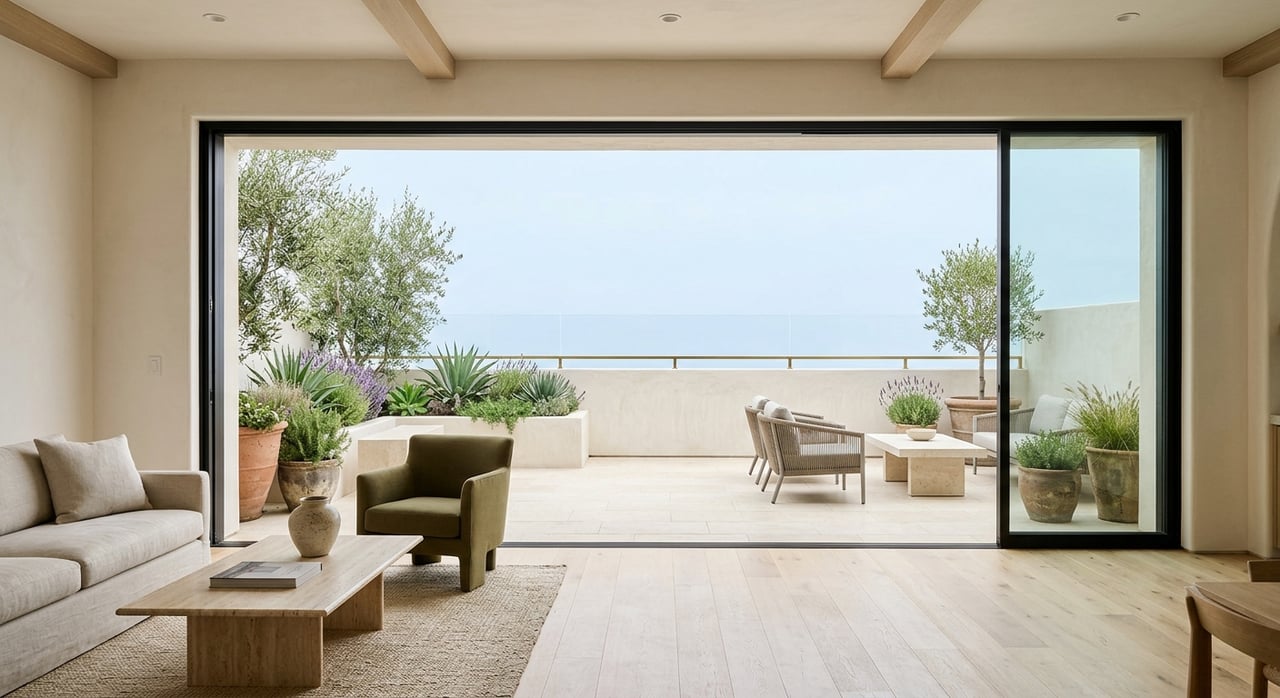
A sweeping skyline is what gets your attention in Hollywood Hills, but it is rarely the only thing that drives price. If you are buying or selling a view home here, you are really dealing with a layered value story that includes the view itself, how long it is likely to last, how private the property feels, and how easy the home is to live in day to day. Understanding those trade-offs can help you price more intelligently, shop more critically, and see past the listing photos. Let’s dive in.
Why a view alone is not enough
In Hollywood Hills, buyers are usually paying for a package, not a single feature. The market tends to reward homes where the view works together with privacy, access, lot usability, and architecture.
That lines up with how appraisers look at hillside properties. Appraisal guidance treats these homes as site, access, adjacency, and highest-and-best-use questions, which means the full property experience matters, not just what you see from the living room.
View quality matters more than view labels
Not all views carry the same weight. A broad, unobstructed, well-framed view is typically more valuable than a partial view, a narrow sightline, or a view that feels easy to lose.
That distinction matters in Hollywood Hills because local planning rules recognize the importance of scenic corridors. The Mulholland Scenic Parkway Specific Plan was created in part to preserve mountain, ocean, and city views, which helps explain why some ridge and canyon locations feel especially prized.
Durable views tend to feel more valuable
A beautiful outlook today is not always enough. Buyers also care about whether the view is likely to stay open over time.
In practical terms, the market usually responds to the quality and persistence of the sightline. A home with a strong view corridor and some protection around it may hold value better than a home with a similar view that feels more vulnerable to future obstruction.
Framed views can still compete
A smaller view is not automatically a weak one. If the home offers a clean visual frame, strong privacy, and better day-to-day function, it can still perform well in the market.
This is why the best Hollywood Hills homes often feel balanced. The view draws you in, but the rest of the property supports the lifestyle buyers expect at that price point.
Privacy shapes the premium
Privacy often changes how a view home feels. Two houses may have similar vistas, but the one with fewer neighbor sightlines, less driveway exposure, and a more secluded setting may feel far more compelling.
Appraisal guidance also supports that idea. Adjoining properties, easements, encroachments, and other surrounding conditions can affect marketability, which is one reason privacy can create real pricing separation in the hills.
Adjacency can help or hurt value
What surrounds a property matters. A view loses some of its impact when outdoor living areas feel exposed or when nearby activity interrupts the sense of retreat.
On the other hand, a home that pairs a strong outlook with a private pad, thoughtful screening, and a calmer setting usually presents as a more complete package. In a market like Hollywood Hills, that combination often feels worth paying for.
Access is part of luxury
In hillside neighborhoods, the arrival experience matters more than many buyers expect. Street width, turning ease, parking, and the practical realities of getting to and from the home all play into value.
Los Angeles hillside rules make access, fire protection, parking, and grading part of the equation. On certain substandard hillside streets, the code can trigger added parking requirements, street dedication, special approvals, or additional review when grading reaches certain levels.
Difficult access can limit appeal
A spectacular view does not erase a stressful drive. If the road feels tight, parking is limited, or future remodeling may be constrained by hillside rules, buyers may discount the home even if the photos are stunning.
That does not mean difficult access kills value. It means the market tends to weigh the full experience, and a home that feels easier to reach and easier to live in may command a stronger response.
Public street frontage also matters
Appraisal guidance says the property should front a publicly dedicated and maintained street that meets community standards. For buyers and sellers, that is a reminder that site utility is part of the valuation story.
In Hollywood Hills, practical access can be a quiet advantage. It may not headline the listing, but it often helps explain why one home trades more strongly than another nearby.
Lot usability affects daily living
Square footage tells only part of the story in the hills. Buyers are also evaluating how the home sits on the lot, how usable the outdoor space is, and whether the property supports the way they actually want to live.
A functional pad for lounging, dining, or pool use can feel more valuable than a larger lot with awkward slope and limited usable area. That is especially true where hillside rules narrow what can be built or changed over time.
Buildable envelope influences value
In hillside code areas, lot coverage and grading limits can compress the buildable envelope. In Hollywoodland, the rules go further by capping lot coverage at 30 percent and limiting height and massing.
Those restrictions can cut both ways. They may limit expansion potential, but they can also reinforce scarcity by preventing overly large additions that would change the character of the area.
Function can beat raw size
A smaller lot with a clean relationship between the house, terrace, and outdoor living areas can compete very well. Buyers do not just buy land area. They buy usefulness, flow, and comfort.
That is why listing photos should never be your only filter. You want to understand the pad, slope, retaining conditions, and how much of the lot is truly usable in daily life.
Architecture creates a second layer of value
In Hollywood Hills, the house itself still has to stand up to the view. Design quality, architectural character, and overall fit with the site can add a second premium layer.
This is especially relevant in areas shaped by preservation and design controls. The city’s HPOZ program exists to protect distinctive architectural and cultural resources, and exterior work in an HPOZ must complement the district’s historic character.
Historic context matters in some pockets
In Whitley Heights, the city highlights hilly terrain, early Mediterranean-inspired development, and Spanish Colonial Revival influence. In Hollywoodland, the specific plan was designed to preserve historic character and architectural quality.
That means buyers may place added value on homes whose scale, massing, and design feel appropriate to the setting. A view home with architectural pedigree often reads as more complete and more defensible in the market.
Local planning rules can preserve or limit value
Hollywood Hills is not one uniform market. Value can shift based on the planning overlays and specific rules that affect a given property.
The updated Hollywood Community Plan area includes overlays and districts that matter to hillside buyers and sellers, including the Hollywoodland Specific Plan, the Mulholland Scenic Parkway Specific Plan, the Hillside Construction Regulation supplemental use district, and the Whitley Heights HPOZ.
Hollywoodland shows how rules shape value
The Hollywoodland Specific Plan aims to preserve community character, prevent overly massive buildings, improve fire protection and safety access on narrow winding streets, protect historic assets, and maintain the hillsides as a natural setting.
It also imposes rules around height, lot coverage, parking, and design review. For owners, that can narrow future building options. For the market, it can also help preserve the scarcity and character that buyers are often paying for.
Mulholland corridor protections matter too
The Mulholland Scenic Parkway Specific Plan focuses on preserving scenic features, minimizing grading and driveway or private street access, and reviewing projects visible from the parkway so they do not obstruct scenic resources.
For a view property, those protections can make the outlook feel more durable. That is one reason some homes along protected ridges and corridors can command stronger interest.
How to read listing photos more critically
Hollywood Hills photography is powerful, but it can hide trade-offs. A dramatic twilight shot may spotlight the skyline while saying very little about driveway access, neighbor exposure, or the usability of the yard.
If you are buying, look beyond the hero image and ask a few simple questions:
- Is the view broad, partial, or tightly framed?
- Does it appear likely to stay open?
- How private do the main outdoor areas feel?
- Does the access feel easy or compromising?
- Is the lot functional for the way you want to live?
- Does the architecture match the price point and setting?
For sellers, the lesson is just as important. The strongest marketing angle is usually the honest, complete package, especially when the view, privacy, access, and design all reinforce one another.
What buyers and sellers should remember
If you are buying in Hollywood Hills, do not pay for a view in isolation. Pay for the combination of sightline, privacy, usability, access, and design quality that supports long-term enjoyment and resale.
If you are selling, think beyond the headline feature. Positioning a home well means understanding which parts of the package truly drive value and presenting them clearly, from the arrival experience to the architecture to the outdoor flow.
In a market this nuanced, great results usually come from reading the property as a whole. That is where thoughtful strategy, design awareness, and local knowledge make a real difference.
If you are preparing to buy or sell a Hollywood Hills view home, Casty Living can help you evaluate the full picture and position the property with clarity, style, and smart market strategy.
FAQs
What drives value in a Hollywood Hills view home?
- Value is usually driven by the full package: view quality, view durability, privacy, access, lot usability, and architectural character.
How important is privacy for Hollywood Hills homes with views?
- Privacy can have a major impact because buyers often pay more for homes that feel secluded and less exposed to neighbors, driveways, or surrounding activity.
Do access and parking affect Hollywood Hills home values?
- Yes. Street width, parking, fire access, and general ease of arrival can shape buyer demand and may influence future remodeling or rebuilding options.
Why does lot usability matter for Hollywood Hills properties?
- Lot usability affects how comfortably you can use outdoor space, place amenities like decks or pools, and enjoy the relationship between the house and the site.
Do planning rules affect the value of Hollywood Hills homes?
- Yes. Local rules in areas such as Hollywoodland, Mulholland Scenic Parkway, and Whitley Heights can influence what can be built, expanded, or preserved over time.
Can a smaller view still add value in Hollywood Hills?
- Yes. A smaller or framed view can still perform well when it is paired with strong privacy, good access, usable outdoor space, and appealing architecture.